Trampoline Park Business Plan: A Comprehensive Guide to Building a Thriving Indoor Adventure Business
A well-crafted trampoline park business plan is the cornerstone of transforming a creative, dynamic recreational concept into a sustainable, profitable enterprise. As indoor trampoline parks continue to gain traction as versatile, family-oriented entertainment hubs, developing a strategic, detail-driven plan is indispensable for standing out in an increasingly competitive market. Whether you’re an aspiring entrepreneur seeking a promising new venture or a fitness lover aiming to merge fun with physical activity, mastering the art of building a thorough trampoline park business plan is the first step toward achieving long-term success.
1. Market Insights: Understanding the Trampoline Park Industry
Before delving into the specifics of your business plan, it’s vital to gain a clear understanding of the industry landscape. Over the past decade, the indoor trampoline park sector has experienced remarkable growth, driven by rising demand for active, social, and secure recreational options that cater to children, teenagers, and adults alike. Modern trampoline parks are far more than just spaces with trampolines—they often feature a diverse range of attractions, including dodgeball arenas, foam pits, climbing walls, ninja obstacle courses, and party spaces, making them appealing to a wide and varied audience.
1.1 Target Audience & Customer Segmentation
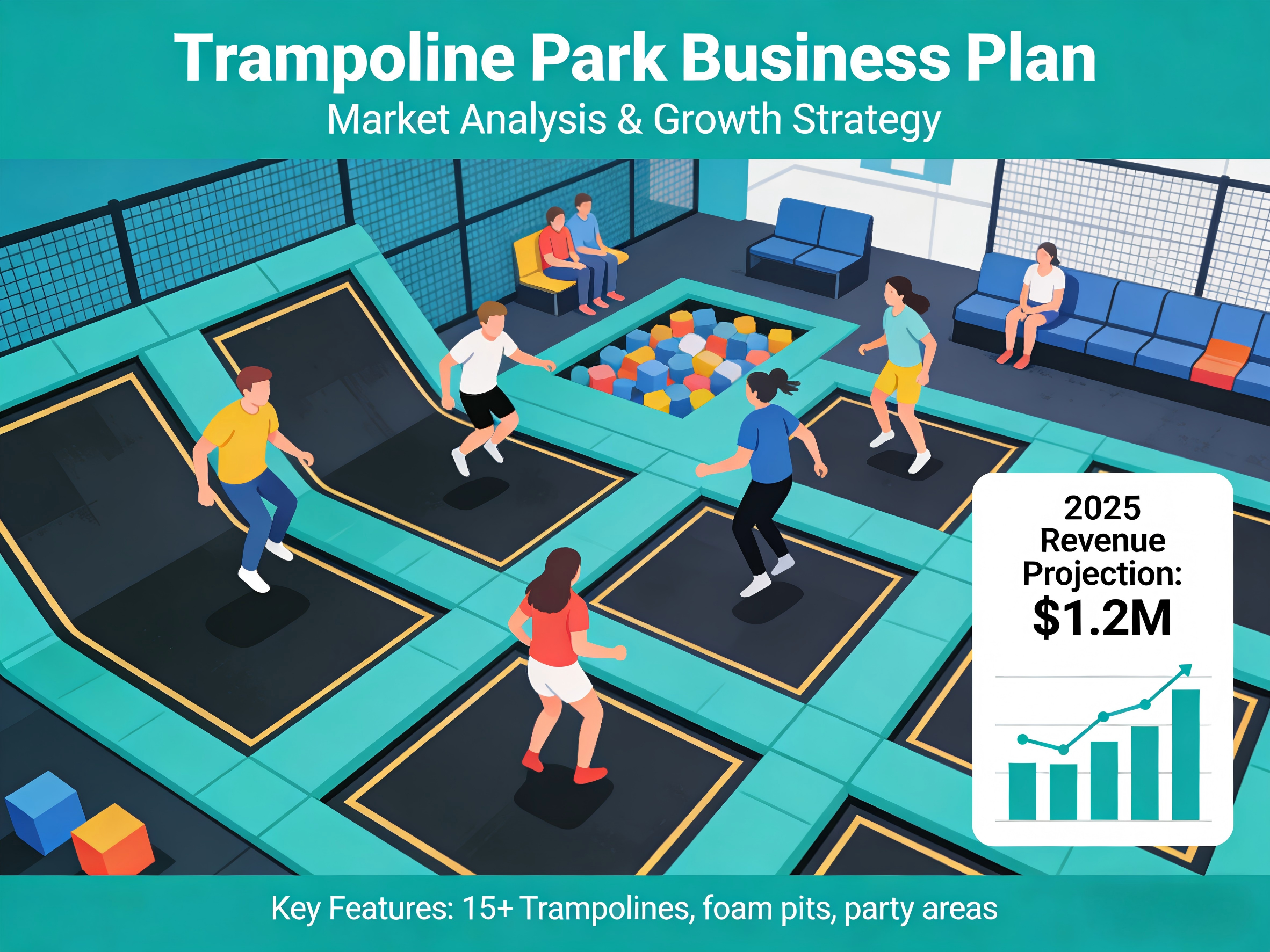
Identifying your core target market is a critical step in shaping your business strategy. Most successful trampoline parks cater to the following key customer segments:
-
Families with children between the ages of 5 and 15, seeking safe and engaging weekend or after-school activities
-
Teenagers and young adults looking for social, group-based entertainment options
-
Fitness enthusiasts searching for low-impact, enjoyable alternatives to traditional workouts
-
Schools, daycares, and community organizations planning field trips, team-building exercises, or group outings
-
Individuals and families seeking unique venues for birthday parties, anniversaries, and other special events
By understanding these segments, you can tailor your marketing initiatives, pricing structures, and facility amenities to meet the specific needs of each group, maximizing customer satisfaction and retention.
1.2 Competitive Analysis
Conducting a thorough competitive analysis is essential to identifying your business’s unique value proposition. Take the time to evaluate existing trampoline parks in your local area or target region, focusing on the following questions:
-
What attractions and services do they offer, and how do these compare to your proposed concept?
-
What pricing models do they use for tickets, memberships, and special events?
-
What are their peak operating hours, and how do they manage customer flow during busy periods?
-
What are their strengths and weaknesses (e.g., safety record, customer service, facility condition)?
Identifying gaps in the market—such as inadequate safety measures, a lack of unique attractions, or poor customer service—can help you differentiate your trampoline park and gain a competitive advantage.
2. Core Elements of a Trampoline Park Business Plan
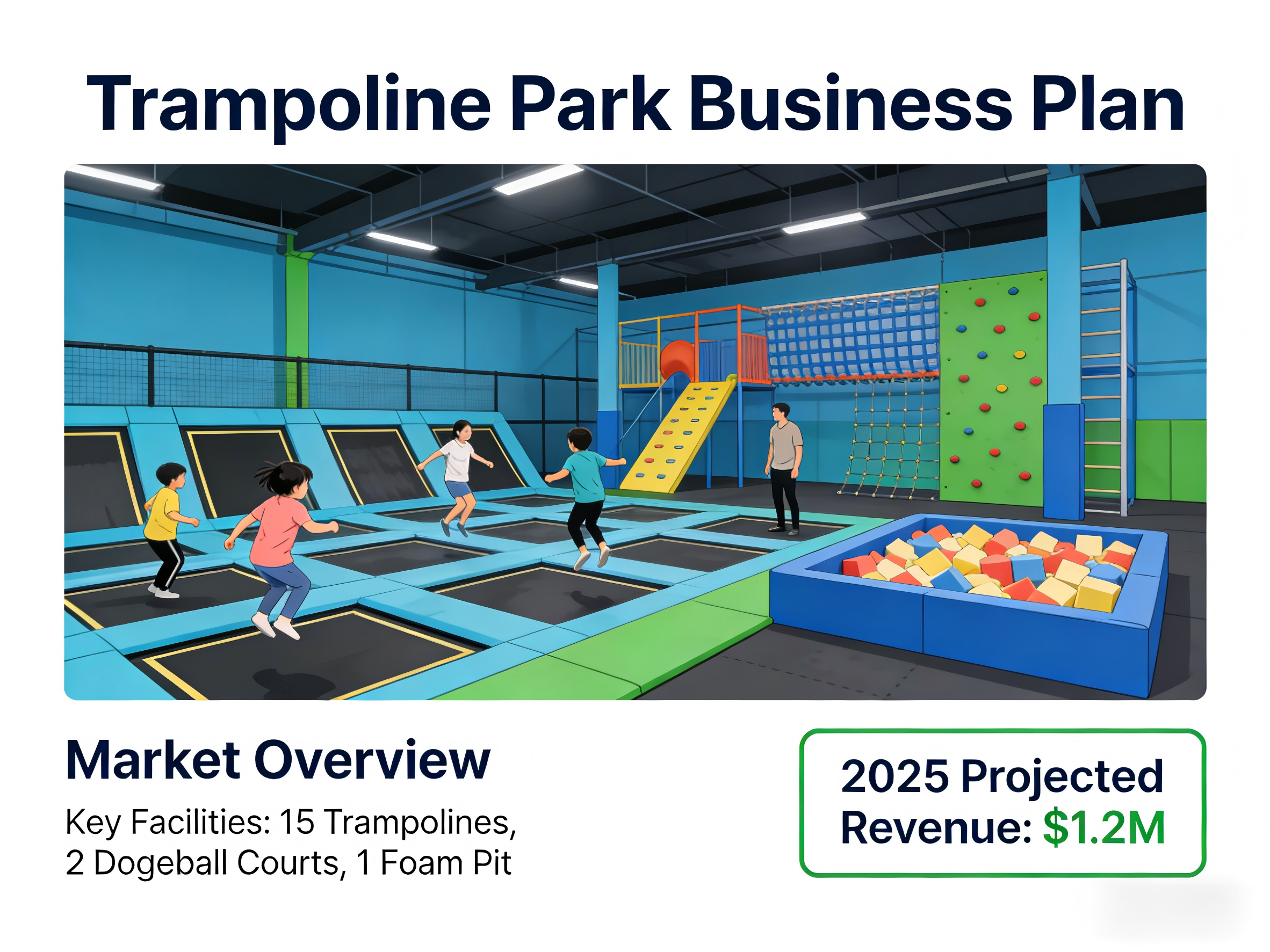
A robust trampoline park business plan is more than a document—it’s a strategic roadmap that guides your business’s growth, ensures financial viability, and communicates your vision to potential investors or lenders. Below are the key components that should be included in your plan:
2.1 Executive Summary
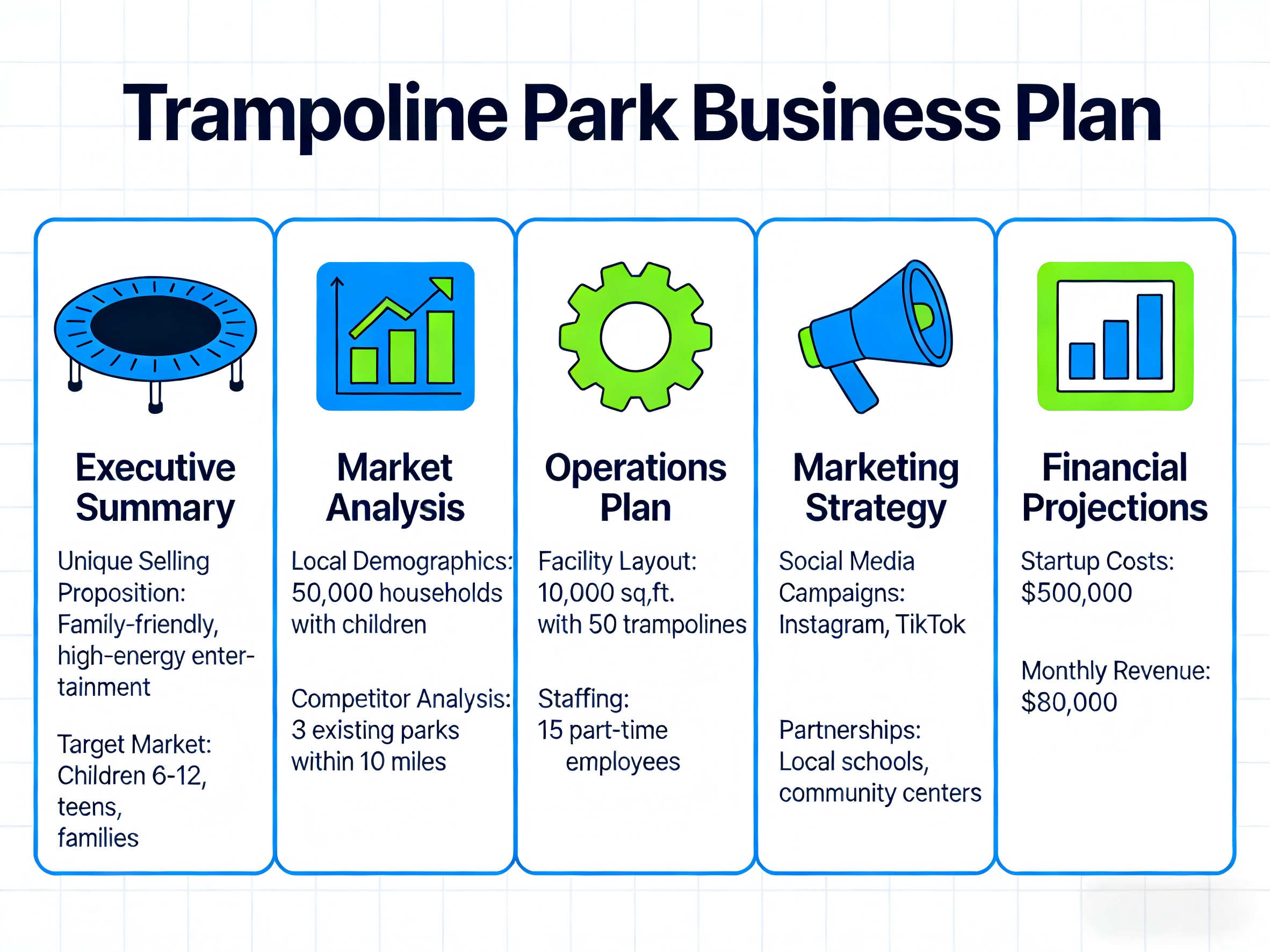
The executive summary is a concise overview of your entire business plan, designed to capture the attention of readers and highlight the most critical aspects of your venture. It should include your business vision, core offerings, target market, unique selling points, and a brief summary of your financial projections. This section should be compelling enough to encourage potential investors or lenders to read further and support your business.
2.2 Business Description
This section details the core concept of your trampoline park, including the size of the facility (in square footage), the types of trampolines you plan to install (e.g., free-jump, dodgeball, basketball dunk), and any additional attractions (such as arcade zones, climbing walls, or snack bars). It should also outline your approach to creating a safe, welcoming environment for guests, including your commitment to safety protocols and customer experience.
2.3 Market Analysis
The market analysis section should build on your initial industry research, providing detailed insights into industry trends, local customer demographics, and competitive dynamics. Use data from industry reports, local surveys, and focus groups to validate the demand for a trampoline park in your target area and demonstrate why your business will succeed where others may have fallen short.
2.4 Marketing Strategy
Your marketing strategy should outline how you will attract, engage, and retain customers. For trampoline parks, effective marketing often combines digital and traditional tactics, such as:
-
Social media campaigns (on platforms like Instagram, TikTok, and Facebook) showcasing behind-the-scenes content, customer testimonials, and special promotions
-
Partnerships with local schools, daycares, and community centers to promote field trips and group discounts
-
Hosting themed events, birthday parties, and corporate team-building sessions to drive repeat business
-
Loyalty programs, seasonal discounts, and referral incentives to encourage customer retention
-
Local advertising (e.g., billboards, radio ads) and influencer partnerships to increase brand visibility
2.5 Operations Plan
The operations plan describes the day-to-day management of your trampoline park, including staffing requirements, safety protocols, maintenance schedules, and customer service standards. Safety is a top priority in this industry, so this section should emphasize your adherence to industry safety regulations, staff training programs, and emergency response procedures. You should also outline your facility’s operating hours, booking systems, and procedures for managing customer flow during peak periods.
2.6 Financial Projections
Financial projections are a critical component of your business plan, as they demonstrate the financial viability of your venture. This section should include detailed forecasts for the following:
-
Startup costs: Including facility lease or purchase, trampoline and equipment installation, interior design, permits, and initial marketing expenses
-
Operational expenses: Including staff salaries, utilities, equipment maintenance, insurance, and ongoing marketing costs
-
Revenue streams: Including ticket sales, memberships, party bookings, merchandise sales, and concession revenue
-
Break-even analysis: Calculating how long it will take for your business to cover its costs and start generating profit
All projections should be realistic and based on thorough research, including local market data and industry benchmarks.
3. Location, Facility, and Layout
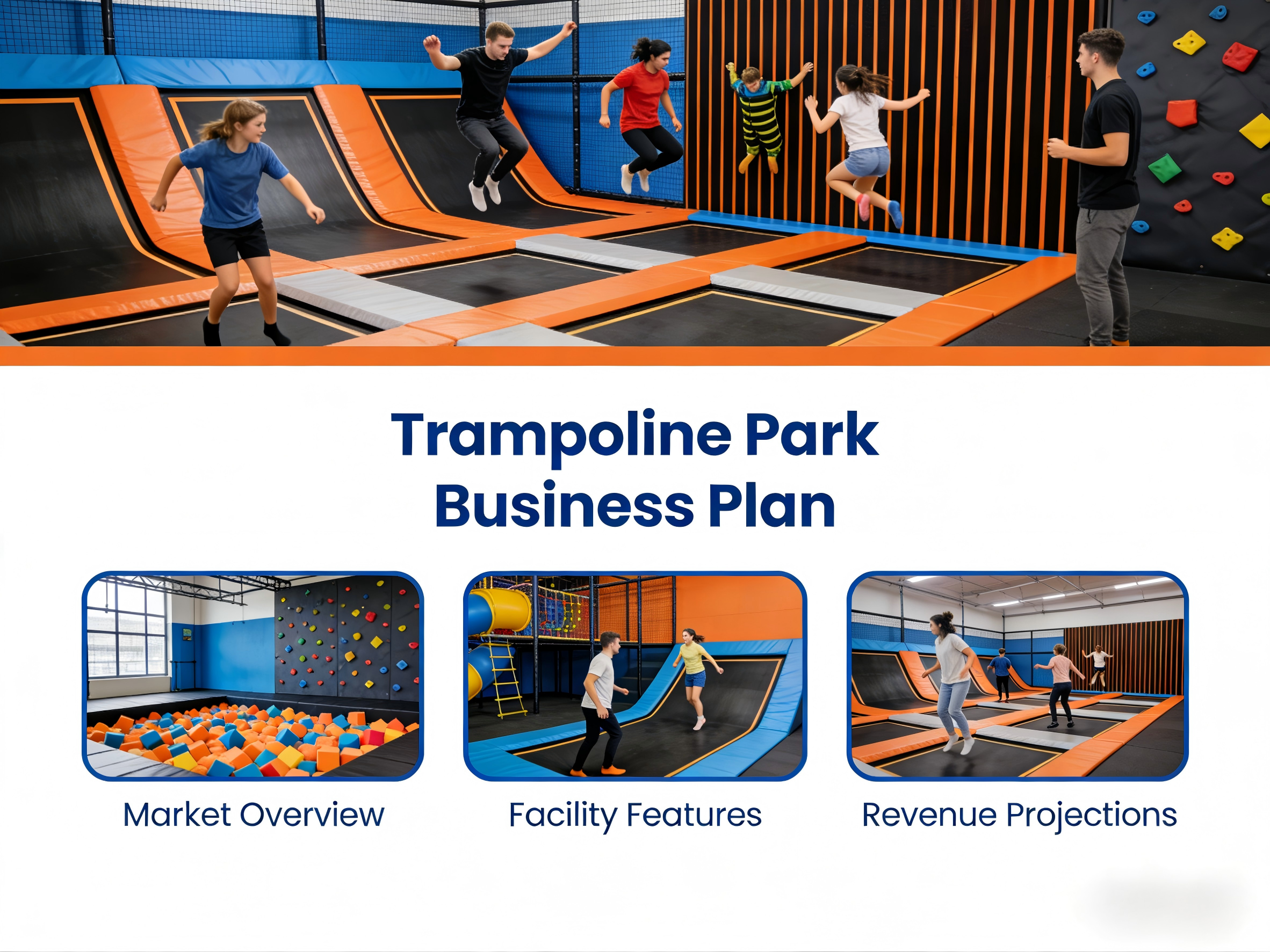
The success of your trampoline park is heavily dependent on its location and facility design. Choosing the right location and optimizing your facility’s layout can significantly impact foot traffic, customer satisfaction, and overall profitability.
3.1 Choosing the Right Location
When selecting a location for your trampoline park, consider the following factors:
-
Population density: Target areas with a high concentration of families and young people
-
Proximity to schools, shopping centers, and residential neighborhoods: These areas attract high foot traffic and make your park easily accessible
-
Accessibility: Ensure the location is easy to reach by car, public transportation, and has ample parking
-
Cost: Balance visibility and accessibility with rental or purchase costs to ensure financial sustainability
Many trampoline park owners opt for warehouse-style buildings, as they offer open floor plans, high ceilings (critical for safe jumping), and cost-effective rental rates.
3.2 Designing the Facility Layout
An effective layout should be both engaging and safe, maximizing space utilization while ensuring staff can easily supervise all areas. Work with designers who have experience in recreational facilities to create a layout that includes the following key zones:
-
Main free-jump area: The central zone for general jumping and casual play
-
Specialized activity zones: Including foam pits, dodgeball courts, basketball dunk zones, and ninja courses
-
Toddler area: A dedicated, padded space for young children to jump safely
-
Party and event rooms: Private spaces for birthday parties, corporate events, and group gatherings
-
Concession stand and seating area: A space for guests to rest, refuel, and socialize
The layout should promote smooth traffic flow, minimize congestion, and ensure clear sightlines for staff to monitor all activities.
4. Safety, Liability, and Staffing
Safety is the foundation of any successful trampoline park. Failing to prioritize safety can lead to injuries, lawsuits, increased insurance costs, and damage to your brand reputation. Additionally, well-trained staff are essential for delivering exceptional customer service and maintaining a safe environment.
4.1 Safety & Liability Measures
To minimize risks and ensure compliance, include the following safety measures in your business plan:
-
Comprehensive staff training: All employees should be trained in first aid, CPR, emergency response, and safety protocols
-
Clear signage and rules: Post visible safety guidelines for each activity zone, including age and weight limits
-
Regular equipment maintenance: Conduct daily inspections of trampolines, padding, and other attractions to identify and repair any damage
-
Safety gear: Provide necessary safety equipment, such as non-slip socks, and encourage guests to use it
-
Liability insurance: Obtain comprehensive liability insurance tailored to trampoline parks—this is non-negotiable to protect your business from lawsuits
-
Waivers and consent forms: Require all guests (or their guardians, for minors) to sign waivers acknowledging the risks associated with trampoline use
4.2 Staffing & Training
Your staff are the face of your business, so hiring the right people and providing ongoing training is crucial. Key positions to include in your staffing plan are:
-
Front desk staff: Responsible for check-in, ticket sales, and customer inquiries
-
Jump monitors: Trained to supervise activities, enforce safety rules, and respond to emergencies
-
Maintenance personnel: In charge of equipment upkeep, facility cleaning, and repairs
-
Event coordinators: Manage birthday parties, corporate events, and group bookings
Implement regular training sessions to ensure staff stay up-to-date on safety protocols, customer service best practices, and emergency procedures. This will help maintain a high standard of service and reduce the risk of accidents.
5. Funding, Financial Management, and Growth
Launching a trampoline park requires a significant initial investment, and effective financial management is essential for long-term success. Additionally, staying ahead of industry trends and adapting to customer preferences will help your business grow and remain competitive.
5.1 Funding Options
Startup costs for a trampoline park typically range from $500,000 to over $1.5 million, depending on the size of the facility, location, and amenities. Common funding options include:
-
Small business loans: From banks or credit unions, often requiring a solid business plan and collateral
-
Investor partnerships: Collaborating with private investors who provide capital in exchange for a share of the business
-
Crowdfunding: Using platforms like Kickstarter or Indiegogo to raise funds from the public
-
Grants: For recreational or community-focused facilities, offered by local governments or non-profit organizations
5.2 Financial Management
Once your park is operational, diligent financial management is key to maintaining profitability. Use accounting software to track revenues, expenses, and cash flow. Monitor key performance indicators (KPIs) such as average spend per visitor, occupancy rates, and customer acquisition costs to make informed business decisions. Adjust your pricing, marketing strategies, and operational costs as needed to ensure financial stability.
5.3 Innovation & Growth
The trampoline park industry is constantly evolving, so staying attuned to new trends and customer preferences is essential for long-term growth. Consider the following strategies to keep your business relevant:
-
Incorporate new attractions: Such as virtual reality (VR) trampoline experiences, fitness classes, or interactive games
-
Diversify revenue streams: Offer birthday party packages, corporate team-building events, seasonal camps, or membership programs
-
Solicit customer feedback: Regularly ask guests for input on their experience and use this feedback to make improvements
-
Host themed events: Such as holiday parties, fitness challenges, or teen nights to attract new customers and encourage repeat visits
6. Frequently Asked Questions (FAQs)
|
Question
|
Answer
|
|
What are the key components of a trampoline park business plan?
|
A comprehensive trampoline park business plan includes an executive summary, business description, market analysis, marketing strategy, operations plan, financial projections, safety protocols, and risk assessment.
|
|
How do I conduct market research for a trampoline park business plan?
|
Market research involves analyzing local demographics (e.g., family population, income levels), evaluating competitors’ offerings and pricing, surveying potential customers to understand preferences, and reviewing industry reports to identify trends and demand.
|
|
What are the startup costs involved in opening a trampoline park?
|
Startup costs vary based on facility size and location but typically range from $500,000 to over $1.5 million. Key expenses include facility lease/purchase, trampoline equipment and installation, safety gear, insurance, permits, marketing, and initial staffing.
|
|
How should I structure the financial projections in my trampoline park business plan?
|
Financial projections should cover 3–5 years and include startup cost breakdowns, monthly/annual revenue forecasts (from tickets, memberships, events, etc.), operating expenses, cash flow statements, profit and loss (P&L) statements, and a break-even analysis.
|
|
What marketing strategies are effective for promoting a trampoline park?
|
Effective strategies include social media marketing (short videos, customer posts), partnerships with local schools/community groups, special promotions (e.g., holiday discounts, group rates), influencer collaborations, and hosting themed events to drive engagement.
|
|
How important is location in a trampoline park business plan?
|
Location is critical—accessibility, proximity to target customers (families, schools), parking availability, and visibility directly impact foot traffic and revenue. A well-chosen location can significantly increase your park’s chances of success.
|
|
What safety measures should be included in the trampoline park business plan?
|
Essential safety measures include staff training (first aid, CPR), regular equipment inspections, clear safety signage/rules, age/weight limits, safety gear provision, comprehensive liability insurance, and customer waivers.
|
|
How can I differentiate my trampoline park from competitors?
|
Differentiate your park by offering unique attractions (e.g., ninja courses, VR experiences), superior customer service, flexible pricing models, family-friendly amenities (e.g., cafes, party rooms), and loyalty programs to encourage repeat visits.
|
|
What are common challenges faced when starting a trampoline park business?
|
Common challenges include high startup costs, liability and safety risks, seasonal fluctuations in attendance, intense competition, staff turnover, and maintaining consistent customer engagement.
|
Crafting a trampoline park business plan requires time, research, and strategic thinking, but it is an invaluable tool for turning your vision into a successful reality. By focusing on market understanding, safety, customer experience, and financial planning, you can build a thriving indoor adventure destination that brings joy, activity, and community connection to your area.

